0. 契机: 在读 accelerate 源码时,发现使用了大量的hook来解决分布式部署LLM,因此,想更加深入了解PyTorch中的hook的使用方式和原理。
1. 什么是hook? hook(钩子)实际上在软件工程中很常见,这根本不是 PyTorch 独有的。通常,“钩子” 是在特定事件后自动执行的函数。
一些常见的hook示例:
网站在您访问 N 个不同的页面后显示广告。
当资金添加到您的帐户时,银行应用程序会发送通知。
当环境光线变暗时,手机会调暗屏幕亮度。
当然这些示例都可以在没有hook的情况下实现。但在许多情况下,hook使程序员的生活更轻松。
2. 什么是PyTorch中的hook? 前提: 为了节省在·显存(内存),PyTorch在计算过程中不保存中间变量,包括中间层的特征图和非叶子张量的梯度等。
有时对网络进行分析时需要查看或修改这些中间变量,此时就需要注册一个钩子(hook)来导出需要的中间变量 。
因此:我们可以利用hook,在不改变网络输入输出的结构的前提下,方便地获取、改变网络中间层变量的值和梯度。这个功能被广泛用于可视化神经网络中间层的 feature、gradient,从而诊断神经网络中可能出现的问题,分析网络有效性。
注意:PyTorch hook是为每个 Tensor 或 nn.Module 对象触发,并由对象的向前 或向后 传递触发。
Hook for Tensors : 针对 Tensor 的 hook
Hook for Modules : 针对例如 nn.Conv2dnn.Linear等网络模块的 hook
可以有如下的定义:
1
2
3
4
5
6
7
8
from torch import nn, Tensordef module_hook (module: nn.Module, input : Tensor, output: Tensor ): def tensor_hook (grad: Tensor ):
值得注意的是:module_hook接收了三个参数 module 、 input 、 output 因此,每个module_hook都可以修改 input、 output 或内部 module 参数。
1. Hook for Tensor 这里只有一种func:
torch.Tensor.register_hook()
举个栗子:
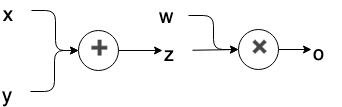
上面的计算图(computation graph)中,x y w 为叶子节点(leaf nodes),而 z 为中间变量。
在 PyTorch 的计算图中,只有叶子结点的变量会保留梯度 。而所有中间变量的梯度只被用于反向传播,一旦完成反向传播,中间变量的梯度就将自动释放 ,从而节约内存。
1
2
3
4
5
6
7
8
9
10
11
12
13
14
15
16
17
18
19
20
21
22
23
import torchx = torch.Tensor([0 , 1 , 2 , 3 ]).requires_grad_() y = torch.Tensor([4 , 5 , 6 , 7 ]).requires_grad_() w = torch.Tensor([1 , 2 , 3 , 4 ]).requires_grad_() z = x+y o = w.matmul(z) o.backward() print ('x.requires_grad:' , x.requires_grad) print ('y.requires_grad:' , y.requires_grad) print ('z.requires_grad:' , z.requires_grad) print ('w.requires_grad:' , w.requires_grad) print ('o.requires_grad:' , o.requires_grad) print ('x.grad:' , x.grad) print ('y.grad:' , y.grad) print ('w.grad:' , w.grad) print ('z.grad:' , z.grad) print ('o.grad:' , o.grad)
由于 z 和 o 为中间变量(并非直接指定数值的变量,而是由别的变量计算得到的变量),它们虽然 requires_grad 的参数都是 True,但是反向传播后,它们的梯度并没有保存下来,而是直接删除了,因此是 None。如果想在反向传播之后保留它们的梯度,则需要特殊指定:把上面代码中的z.retain_grad() 和 o.retain_grad的注释去掉,可以得到它们对应的梯度,运行结果如下所示:
1
2
3
4
5
6
7
8
9
10
11
12
13
14
z.retain_grad() o.retain_grad() ---------------------------------------------------------------- output: x.requires_grad: True y.requires_grad: True z.requires_grad: True w.requires_grad: True o.requires_grad: True x.grad: tensor([1. , 2. , 3. , 4. ]) y.grad: tensor([1. , 2. , 3. , 4. ]) w.grad: tensor([ 4. , 6. , 8. , 10. ]) z.grad: tensor([1. , 2. , 3. , 4. ]) o.grad: tensor(1. )
但是,这种加 retain_grad() 的方案会增加内存占用,并不是个好办法,对此的一种替代方案,就是用 hook 保存中间变量的梯度。
对于中间变量 z,hook 的使用方式为:
z.register_hook(hook_fn)
其中 hook_fn 为一个用户自定义的函数,其签名为:
hook_fn(grad) -> Tensor or None ,其中:
参数 grad :
这是传递给 hook_fn 的梯度张量,即当前变量 z 在反向传播过程中计算出来的梯度。
这个梯度张量的形状与变量 z 的形状一致。
返回值 Tensor 或 None :
Nonez,再继续向前传播之前,将会传入 hook_fn。如果 hook_fn的返回值是 None,那么梯度将不改变,继续向前反向传播。Tensorhook_fn 返回一个新的张量,这个张量将替代原始的梯度,并用于后续的反向传播。
值得注意的是:
这里的 hook_fn 只影响tensor的反向传播,不影响推理/正向传播。
注册的钩子函数只能被调用一次 ,即在每次反向传播过程中,只要梯度被计算,钩子函数就会被调用,但不会在未来的反向传播中重复调用,除非重新注册
下面的示例代码中 hook_fn 不改变梯度值,仅仅是打印梯度:
1
2
3
4
5
6
7
8
9
10
11
12
13
14
15
16
17
18
19
20
21
22
23
24
import torchx = torch.Tensor([0 , 1 , 2 , 3 ]).requires_grad_() y = torch.Tensor([4 , 5 , 6 , 7 ]).requires_grad_() w = torch.Tensor([1 , 2 , 3 , 4 ]).requires_grad_() z = x+y def hook_fn (grad ): print (grad) z.register_hook(hook_fn) o = w.matmul(z) print ('=====Start backprop=====' )o.backward() print ('=====End backprop=====' )print ('x.grad:' , x.grad)print ('y.grad:' , y.grad)print ('w.grad:' , w.grad)print ('z.grad:' , z.grad)
运行结果如下:
1
2
3
4
5
6
7
=====Start backprop===== tensor([1. , 2. , 3. , 4. ]) =====End backprop===== x.grad: tensor([1. , 2. , 3. , 4. ]) y.grad: tensor([1. , 2. , 3. , 4. ]) w.grad: tensor([ 4. , 6. , 8. , 10. ]) z.grad: None
我们发现: z绑定了 hook_fn后,梯度反向传播时将会打印出 o 对 z的偏导,和上文中 z.retain_grad()方法得到的 z 的偏导一致。
接下来可以试一下,在 hook_fn 中改变梯度值,看看会有什么结果。
1
2
3
def hook_fn (grad ): grad = grad * 2 print (grad)
运行结果如下:
1
2
3
4
5
6
7
=====Start backprop===== tensor([2. , 4. , 6. , 8. ]) =====End backprop===== x.grad: tensor([2. , 4. , 6. , 8. ]) y.grad: tensor([2. , 4. , 6. , 8. ]) w.grad: tensor([ 4. , 6. , 8. , 10. ]) z.grad: None
当一个变量绑定多个 hook_fn 时:
1
2
3
4
5
6
···· z.register_hook(lambda x: 2 *x) z.register_hook(lambda x: print (x)) ····
运行结果和上面的代码相同,我们发现一个变量可以绑定多个 hook_fn,反向传播时,它们按绑定顺序依次执行。例如上面的代码中,第一个绑定的 hook_fn把 z的梯度乘以2,第二个绑定的 hook_fn打印 z的梯度。因此反向传播时,也是按照这个顺序执行的,打印出来的 z的梯度值,是其原本梯度值的两倍。
2. Hook for Module 共有三个func:
1
2
3
torch.nn.Module.register_forward_hook() torch.nn.Module.register_backward_hook() torch.nn.Module.register_forward_pre_hook()
难点: 网络模块 module 不像 Tensor,拥有显式的变量名可以直接访问,而是被封装在神经网络中间。我们通常只能获得网络整体的输入和输出,对于夹在网络中间的模块,我们不但很难得知它输入/输出的梯度,甚至连它输入输出的数值都无法获得。 除非设计网络时,在 forward 函数的返回值中包含中间 module 的输出,或者用很麻烦的办法,把网络按照 module 的名称拆分再组合,让中间层提取的 feature 暴露出来。(深有感触,这也是分布式部署LLM的难点)
为了解决这个麻烦,PyTorch 设计了两种 hook:
register_forward_hookregister_backward_hook
分别用来获取正/反向传播时,中间层模块输入和输出的 feature/gradient,大大降低了获取模型内部信息流的难度。
torch.nn.Module.register_forward_hook() register_forward_hook的作用是获取前向传播过程中,各个网络模块的输入和输出。对于模块 module,其使用方式为: module.register_forward_hook(hook_fn) 。
其中 hook_fn的签名为:
hook_fn(module, input, output) -> None
它的输入变量分别为:模块 module,模块的输入 input,模块的输出 output 。
和对 Tensor 的 hook 不同, forward hook 不返回任何值,也就是说不能用它来修改输入或者输出的值,但借助这个 hook,我们可以方便地用预训练的神经网络提取特征,而不用改变预训练网络的结构。
举个栗子 1 2 3 4 5 6 7 8 9 10 11 12 13 14 15 16 17 18 19 20 21 22 23 24 25 26 27 28 29 30 31 32 33 34 35 36 37 38 39 40 41 42 43 44 45 46 47 48 49 50 51 52 53 54 55 56 57 58 59 60 61 62 63 import torchfrom torch import nnclass Model (nn.Module): def __init__ (self ): super (Model, self).__init__() self.fc1 = nn.Linear(3 , 4 ) self.relu1 = nn.ReLU() self.fc2 = nn.Linear(4 , 1 ) self.initialize() def initialize (self ): with torch.no_grad(): self.fc1.weight = torch.nn.Parameter( torch.Tensor([[1. , 2. , 3. ], [-4. , -5. , -6. ], [7. , 8. , 9. ], [-10. , -11. , -12. ]])) self.fc1.bias = torch.nn.Parameter(torch.Tensor([1.0 , 2.0 , 3.0 , 4.0 ])) self.fc2.weight = torch.nn.Parameter(torch.Tensor([[1.0 , 2.0 , 3.0 , 4.0 ]])) self.fc2.bias = torch.nn.Parameter(torch.Tensor([1.0 ])) def forward (self, x ): o = self.fc1(x) o = self.relu1(o) o = self.fc2(o) return o total_feat_out = [] total_feat_in = [] def hook_fn_forward (module, input , output ): print (module) print ('input' , input ) print ('output' , output) total_feat_out.append(output) total_feat_in.append(input ) model = Model() modules = model.named_children() for name, module in modules: module.register_forward_hook(hook_fn_forward) x = torch.Tensor([[1.0 , 1.0 , 1.0 ]]).requires_grad_() o = model(x) o.backward() print ('==========Saved inputs and outputs==========' )for idx in range (len (total_feat_in)): print ('input: ' , total_feat_in[idx]) print ('output: ' , total_feat_out[idx])
运行结果为:
1 2 3 4 5 6 7 8 9 10 11 12 13 14 15 16 Linear(in_features=3 , out_features=4 , bias=True ) input (tensor([[1. , 1. , 1. ]], requires_grad=True ),)output tensor([[ 7. , -13. , 27. , -29. ]], grad_fn=<AddmmBackward0>) ReLU() input (tensor([[ 7. , -13. , 27. , -29. ]], grad_fn=<AddmmBackward0>),)output tensor([[ 7. , 0. , 27. , 0. ]], grad_fn=<ReluBackward0>) Linear(in_features=4 , out_features=1 , bias=True ) input (tensor([[ 7. , 0. , 27. , 0. ]], grad_fn=<ReluBackward0>),)output tensor([[89. ]], grad_fn=<AddmmBackward0>) ==========Saved inputs and outputs========== input : (tensor([[1. , 1. , 1. ]], requires_grad=True ),)output: tensor([[ 7. , -13. , 27. , -29. ]], grad_fn=<AddmmBackward0>) input : (tensor([[ 7. , -13. , 27. , -29. ]], grad_fn=<AddmmBackward0>),)output: tensor([[ 7. , 0. , 27. , 0. ]], grad_fn=<ReluBackward0>) input : (tensor([[ 7. , 0. , 27. , 0. ]], grad_fn=<ReluBackward0>),)output: tensor([[89. ]], grad_fn=<AddmmBackward0>)
torch.nn.Module.register_backward_hook() 和 register_forward_hook相似 register_backward_hook 的作用是获取神经网络反向传播过程中,各个模块输入端和输出端的梯度值。
对于模块 module,其使用方式为:
module.register_backward_hook(hook_fn)
其中 hook_fn的函数签名为:
hook_fn(module, grad_input, grad_output) -> Tensor or None
它的输入变量分别为:模块 module,模块输入端的梯度 grad_input , 模块输出端的梯度 grad_output 。
如果模块有多个输入或者输出的话 grad_input和 grad_output可以是 tuple 类型。对于线性模块:o=W*x+b ,它的输入端包括了W、x 和 b 三部分,因此 grad_input 就是一个包含三个元素的 tuple。
这里注意和 forward hook 的不同 :
1.在 forward hook 中,input 是 x,而不包括 W 和 b。
2.返回 Tensor 或者 None,backward hook 函数不能直接改变它的输入变量,但是可以返回新的 grad_input,反向传播到它上一个模块
Talk is cheap, show you the code. 1 2 3 4 5 6 7 8 9 10 11 12 13 14 15 16 17 18 19 20 21 22 23 24 25 26 27 28 29 30 31 32 33 34 35 36 37 38 39 40 41 42 43 44 45 46 47 48 49 50 51 52 53 54 55 56 57 58 59 60 import torchfrom torch import nnclass Model (nn.Module): def __init__ (self ): super (Model, self).__init__() self.fc1 = nn.Linear(3 , 4 ) self.relu1 = nn.ReLU() self.fc2 = nn.Linear(4 , 1 ) self.initialize() def initialize (self ): with torch.no_grad(): self.fc1.weight = torch.nn.Parameter( torch.Tensor([[1. , 2. , 3. ], [-4. , -5. , -6. ], [7. , 8. , 9. ], [-10. , -11. , -12. ]])) self.fc1.bias = torch.nn.Parameter(torch.Tensor([1.0 , 2.0 , 3.0 , 4.0 ])) self.fc2.weight = torch.nn.Parameter(torch.Tensor([[1.0 , 2.0 , 3.0 , 4.0 ]])) self.fc2.bias = torch.nn.Parameter(torch.Tensor([1.0 ])) def forward (self, x ): o = self.fc1(x) o = self.relu1(o) o = self.fc2(o) return o total_grad_out = [] total_grad_in = [] def hook_fn_backward (module, grad_input, grad_output ): print (module) print ('grad_output' , grad_output) print ('grad_input' , grad_input) total_grad_in.append(grad_input) total_grad_out.append(grad_output) model = Model() modules = model.named_children() for name, module in modules: module.register_backward_hook(hook_fn_backward) x = torch.Tensor([[1.0 , 1.0 , 1.0 ]]).requires_grad_() o = model(x) o.backward() print ('==========Saved inputs and outputs==========' )for idx in range (len (total_grad_in)): print ('grad output: ' , total_grad_out[idx]) print ('grad input: ' , total_grad_in[idx])
output:
1 2 3 4 5 6 7 8 9 10 11 12 13 14 15 16 17 18 19 20 21 22 23 24 25 26 Linear(in_features=4 , out_features=1 , bias=True ) grad_output (tensor([[1. ]]),) grad_input (tensor([1. ]), tensor([[1. , 2. , 3. , 4. ]]), tensor([[ 7. ], [ 0. ], [27. ], [ 0. ]])) ReLU() grad_output (tensor([[1. , 2. , 3. , 4. ]]),) grad_input (tensor([[1. , 0. , 3. , 0. ]]),) Linear(in_features=3 , out_features=4 , bias=True ) grad_output (tensor([[1. , 0. , 3. , 0. ]]),) grad_input (tensor([1. , 0. , 3. , 0. ]), tensor([[22. , 26. , 30. ]]), tensor([[1. , 0. , 3. , 0. ], [1. , 0. , 3. , 0. ], [1. , 0. , 3. , 0. ]])) ==========Saved inputs and outputs========== grad output: (tensor([[1. ]]),) grad input : (tensor([1. ]), tensor([[1. , 2. , 3. , 4. ]]), tensor([[ 7. ], [ 0. ], [27. ], [ 0. ]])) grad output: (tensor([[1. , 2. , 3. , 4. ]]),) grad input : (tensor([[1. , 0. , 3. , 0. ]]),) grad output: (tensor([[1. , 0. , 3. , 0. ]]),) grad input : (tensor([1. , 0. , 3. , 0. ]), tensor([[22. , 26. , 30. ]]), tensor([[1. , 0. , 3. , 0. ], [1. , 0. , 3. , 0. ], [1. , 0. , 3. , 0. ]]))
需要注意的是,对线性模块,其中 grad_input 是一个三元组,排列顺序分别为:对 bias 的导数,对输入 x 的导数,对权重 W 的导数。
注意:
register_backward_hook只能操作简单模块,而不能操作包含多个子模块的复杂模块。如果对复杂模块用了 backward hook,那么我们只能得到该模块最后一次简单操作的梯度信息 。
例如: 对于上面的代码稍作修改,不再遍历各个子模块,而是把 model 整体绑在一个 hook_fn_backward上:
1
2
3
.... model = Model()model.register_backward_hook(hook_fn_backward) ....
output:
1
2
3
4
5
6
7
8
9
10
11
12
13
14
15
16
Model( (fc1): Linear(in_features=3 , out_features=4 , bias=True ) (relu1): ReLU() (fc2): Linear(in_features=4 , out_features=1 , bias=True ) ) grad_output (tensor([[1. ]]),) grad_input (tensor([1. ]), tensor([[1. , 2. , 3. , 4. ]]), tensor([[ 7. ], [ 0. ], [27. ], [ 0. ]])) ==========Saved inputs and outputs========== grad output: (tensor([[1. ]]),) grad input : (tensor([1. ]), tensor([[1. , 2. , 3. , 4. ]]), tensor([[ 7. ], [ 0. ], [27. ], [ 0. ]]))
参考资料 https://www.cnblogs.com/sddai/p/14412250.html
https://blog.csdn.net/Brikie/article/details/114255743
https://medium.com/the-dl/how-to-use-pytorch-hooks-5041d777f904